Electric vs. Gas Go Karts: Which Path Offers Better ROI for Track Owners?
全球卡丁车行业正朝着环保解决方案转型。我们对电动卡丁车和燃油卡丁车在前期成本、日常维护、赛道通风要求以及客户偏好等方面进行了分析。
Electric vs. Gas Go Karts: Which Path Offers Better ROI for Track Owners?
As global entertainment trends shift toward sustainability and premium, high-tech experiences, prospective go-kart track operators face a massive crossroads: Should you invest in traditional gasoline-powered karts, or go fully electric?
There is plenty of marketing fluff online regarding both options. As an OEM manufacturer that designs and builds both gas and electric platforms, we have no bias. Let’s look purely at the hard data, the engineering differences, and the ultimate Return on Investment (ROI) for your business.
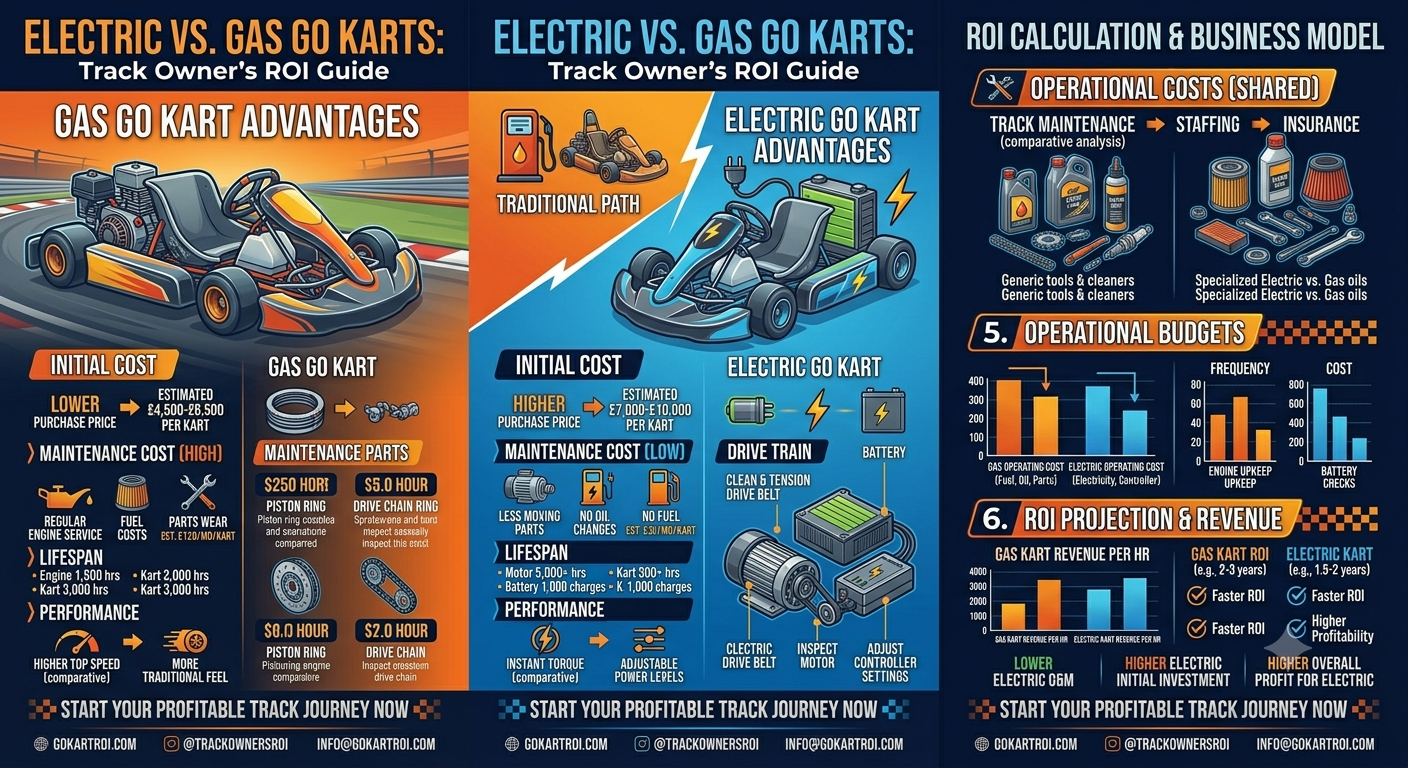
Upfront Capital Expenditure (CapEx) vs. Operational Expenditure (OpEx)
The financial battle line between gas and electric is clearly drawn between what you pay today versus what you pay over the next three years.
+--------------------------+-----------------------+-----------------------+
| Metrics                  | Gasoline Fleets       | Electric Fleets       |
+--------------------------+-----------------------+-----------------------+
| Initial Upfront Cost     | Lower (Baseline)      | 40% - 60% Higher      |
| Daily Energy Cost        | Fluctuating Fuel      | Low, Predictable Base |
| Routine Maintenance      | High (Oil, Belts, etc)| Minimal (Pads & Tires)|
| Infrastructure Needed    | Advanced HVAC (Indoor)| Charging Bays & Grid  |
+--------------------------+-----------------------+-----------------------+
While a fleet of 200cc gas karts requires a much lower initial checkout check, their daily operational costs are high. You are paying for fuel, spark plugs, centrifugal clutch replacements, and constant engine oil changes.
Electric karts reverse this dynamic. The initial investment hurts because of the cost of lithium-ion batteries and sophisticated motor controllers. However, your daily operational cost plummets. There are no engines to tune, no air filters to clean, and your electric utility bill will always be significantly cheaper than bulk gasoline delivery.
The Indoor Venue HVAC Factor
If your track layout is indoors, the decision is almost made for you by your local building codes. Gas karts produce carbon monoxide and nitrogen oxides. To keep your air clean and breathable, your local municipality will require an industrial-grade air exchange system.
We have seen clients buy cheap gas karts for an indoor venue, only to find out that the required roof-mounted HVAC system cost them an additional $80,000 USD. Electric karts completely erase this headache, allowing you to set up shop in commercial shopping malls or downtown warehouses without air quality friction.
The Driver Experience: Torque vs. Auditory Thrills
From a consumer perspective, the demographic you are targeting matters immensely:
The Corporate/Millennial Crowd: Electric karts excel here. They offer a linear, instant torque curve. The moment the driver hits the pedal, 100% of the motor's power is delivered directly to the rear axle. It feels violently fast out of tight corners. Plus, the absence of greasy exhaust smoke appeals to high-end corporate party bookings.
The Hardcore Racing Purists: These drivers want the smell of fuel, the tactile vibration of a combustion engine idling under their seat, and the mechanical feedback of a gas powertrain.
The Verdict
If you are building an outdoor track with access to affordable local mechanical labor, a gas-powered fleet remains a highly lucrative, reliable option. But if you are building an indoor family entertainment center (FEC) or a high-end urban racing hub, electric karts—despite the initial premium—will deliver a superior, hassle-free long-term ROI.