Commercial Go Kart Track Design: Maximizing Throughput and Driver Excitement
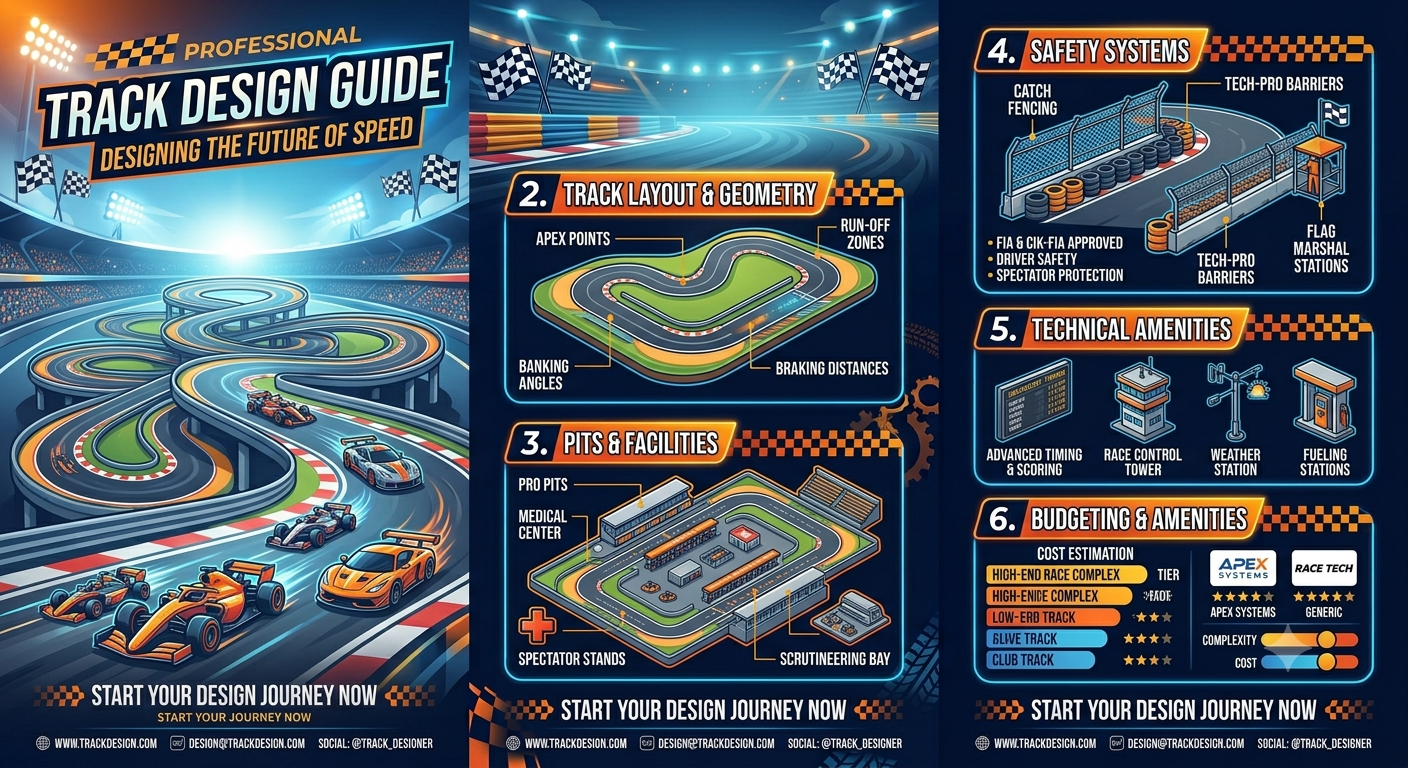
A poorly designed track layout creates bottlenecks and lowers customer satisfaction. Learn the core principles of race track engineering, including overtaking zone creation, safety barrier placement, and lap-timing system integration.
Commercial Go Kart Track Design: Maximizing Throughput and Driver Excitement
When building a commercial go-karting venue, many operators treat track design like a work of art. They sketch out a series of loops, hairpins, and straightaways that look cool on paper. This is a massive mistake.
In the real world, track design is an exercise in industrial engineering and crowd logistics. A poorly designed track creates major bottlenecks, increases accidents, slows down your customer rotation rates, and ultimately kills your revenue. If you want to design a track layout that maximizes both driver adrenaline and your daily cash flow, you must design around these three core manufacturing and operational principles.
1. Designing for High Track Throughput (The "No-Bottleneck" Rule)
Your track's profitability is determined by its hourly throughput—how many paying drivers you can safely cycle through the venue per hour.
If your track layout features too many tight, single-file hairpins, slower amateur drivers will inevitably cluster together, creating a permanent rolling traffic jam. This ruins the experience for faster drivers and increases low-speed bumper collisions, which wears out your fleet's bodywork.
The Fix: Your track width must be a minimum of 6 to 8 meters wide across the entire lap. This allows ample space for at least three karts to race side-by-side.
Ensure that every tight, technical corner is preceded and followed by a wide, progressive curve to give drivers a chance to pass cleanly without relying on aggressive contact.
2. The Architecture of a True Overtaking Zone
To keep customers coming back, your track needs to feel competitive and exciting. The best way to achieve this is by engineered overtaking zones.
A classic, highly effective layout involves designing a long, high-speed straightaway that feeds directly into a wide, late-apex 90-degree turn. This creates a "heavy braking zone." Faster drivers can use the draft on the straight, out-brake their opponent on the inside entry of the corner, and make a clean, exhilarating pass without touching the barriers. At Changfeng Kart, we recommend integrating at least two clear overtaking zones per 400 meters of track length.
3. Pit Lane Logistics and Safety Barriers
The pit lane is the manufacturing assembly line of your entertainment venue. It needs to be completely isolated from the high-speed racing line.
The Pit Entry: The deceleration lane entering the pits must be long, clearly marked, and feature an automated or mandatory speed-governing zone (easily controlled if you are running electric karts with remote fleet management).
Barrier Engineering: Avoid outdated, rigid concrete walls or unanchored stacks of old car tires. Modern commercial tracks use interlocking, high-impact polyethylene barrier systems (such as TechPro or similar heavy-duty plastic designs). These systems slide slightly upon impact, absorbing and dispersing the kinetic energy over a 20-meter section rather than stopping the kart instantly. This drastically reduces driver injury risks and chassis damage.
Partnering with the Right Equipment Manufacturer
A brilliant track design is useless if your karts aren't engineered to handle its specific characteristics. A tight, indoor multi-level track requires a kart with massive low-end torque and sharp steering angles (ideal for an electric platform), while a wide, flowing outdoor asphalt circuit demands a higher top-speed setup with robust cooling. Work closely with your kart manufacturer during the initial track plotting phase—their engineering team can provide vital simulations to ensure your layout matches your fleet's true capabilities.