Go Kart Maintenance Checklist: How to Extend the Lifespan of Racing Parts
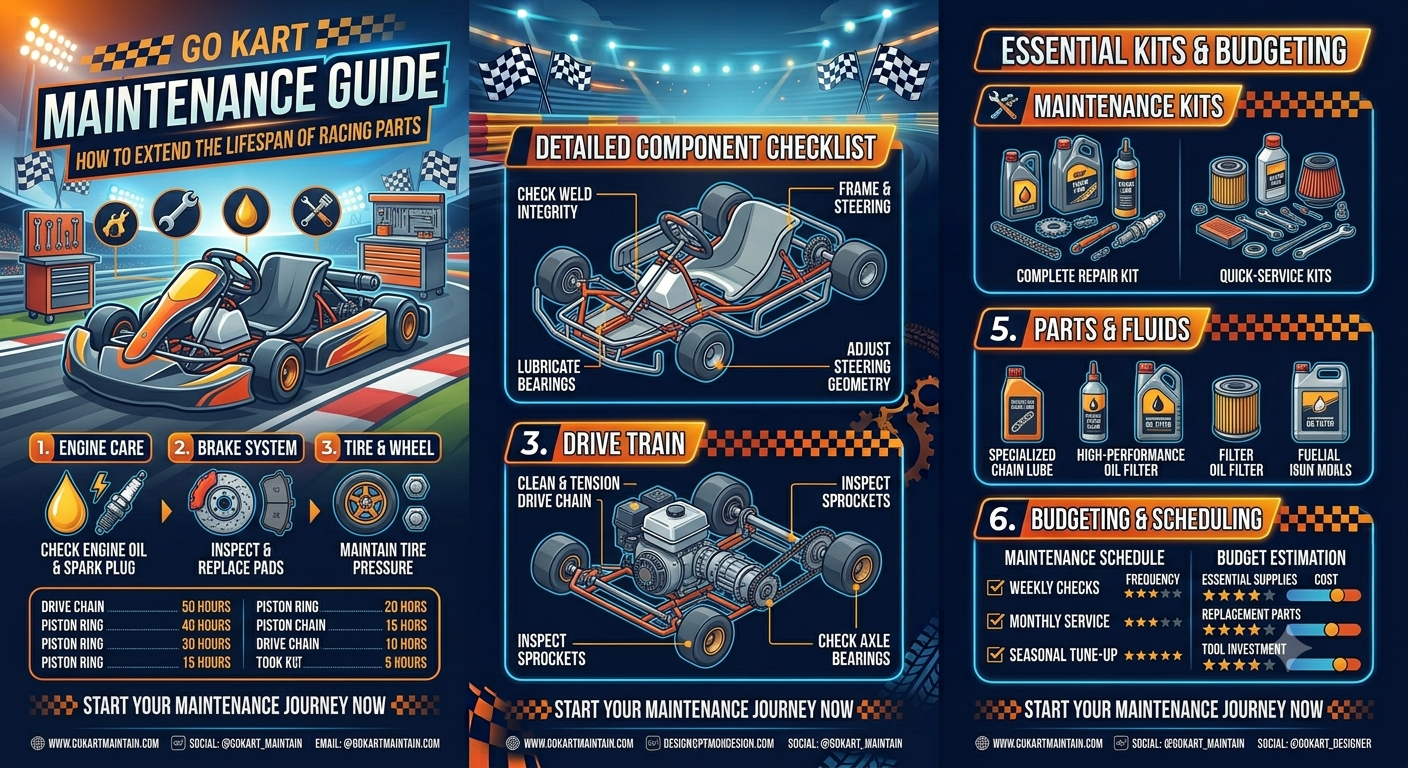
Preventive maintenance prevents downtime on busy weekends. Download our complete technical checklist for inspecting kart chassis alignment, brake pads, drive chains, and tires to keep your fleet running smoothly.
Go Kart Maintenance Checklist: How to Extend the Lifespan of Your Racing Parts
In commercial karting, an idle kart is a liability. If a kart is sitting in your mechanical workshop waiting for replacement parts on a busy Saturday afternoon, you are actively losing money.
Preventive maintenance is the secret weapon of the world’s most profitable kart tracks. By implementing a strict inspection schedule, you can catch minor component wear before it escalates into a catastrophic mechanical failure. Bookmark this engineering-backed maintenance checklist, developed by our technical support team at Changfeng Kart, to keep your fleet operating at peak efficiency.
Daily Inspections (Every Morning Before Track Opening)
These tasks take less than five minutes per kart but prevent 80% of common track incidents:
Tire Pressure Verification: Rental kart tires endure massive lateral G-forces. Check pressures when cold. Under-inflated tires cause sluggish handling and uneven sidewall wear, while over-inflated tires reduce grip and increase the risk of a spin-out.
Steering Linkage and Tie-Rods: Physically shake the front wheels to check for excessive play. Ensure that all cotter pins, lock nuts, and rod-end bearings are tight. A failure in the steering linkage at high speed is an instant crash.
Brake Pedal Fluid Level: Visually inspect the master cylinder reservoir. Check underneath the chassis for any signs of dripping hydraulic fluid near the calipers or lines.
Weekly Deep Dives (Every 50 Operating Hours)
This is where your mechanics earn their keep. Focus on the high-friction, high-vibration zones of the powertrain:
+---------------------+-------------------------------------------------------+
| Component           | Specific Inspection Action                            |
+---------------------+-------------------------------------------------------+
| Drive Chain/Belt    | Check play (should be 10-15mm). Lubricate with        |
|                     | high-tack chain wax. Inspect master links.            |
+---------------------+-------------------------------------------------------+
| Centrifugal Clutch  | Check for slippage. Degrease internal drums.          |
|                     | Replace worn internal springs or friction shoes.      |
+---------------------+-------------------------------------------------------+
| Brake Pads          | Inspect friction material. Replace immediately if     |
|                     | thickness falls below 1.5mm to save the rotor.        |
+---------------------+-------------------------------------------------------+
Chassis Alignment Check: Over time, heavy side impacts will subtly warp even the best steel frames. Use a laser alignment tool weekly to ensure the front spindle geometry (camber and toe-in) matches factory specs. Misaligned karts tear through expensive front tires within days.
Monthly Factory Overhauls (Every 200 Operating Hours)
Engine Oil and Filter Service (Gas Karts): Four-stroke rental engines run hot and hard. Change the oil every 200 hours max using premium synthetic small-engine oil. Clean or replace the air filters—especially on outdoor dirt tracks or dusty concrete surfaces.
Bumper Hardware Inspection: Remove the bodywork and inspect the rubber shock dampeners that isolate the bumper from the main frame. If the rubber has decayed or split, replace it. Otherwise, the next impact will transfer directly to the weld joints of your chassis.
Sourcing High-Quality Spares
No matter how meticulous your maintenance is, parts will wear out. The key is having a reliable supply chain. Avoid generic, unbranded aftermarket parts found on consumer retail sites; they are not engineered for commercial duty cycles. Always source your replacement components—from heavy-duty clutches to high-wear brake pads—directly from a verified commercial kart manufacturer who understands the exact tolerances required for industrial rental applications.